Yuzef Szafki (1950-2021)
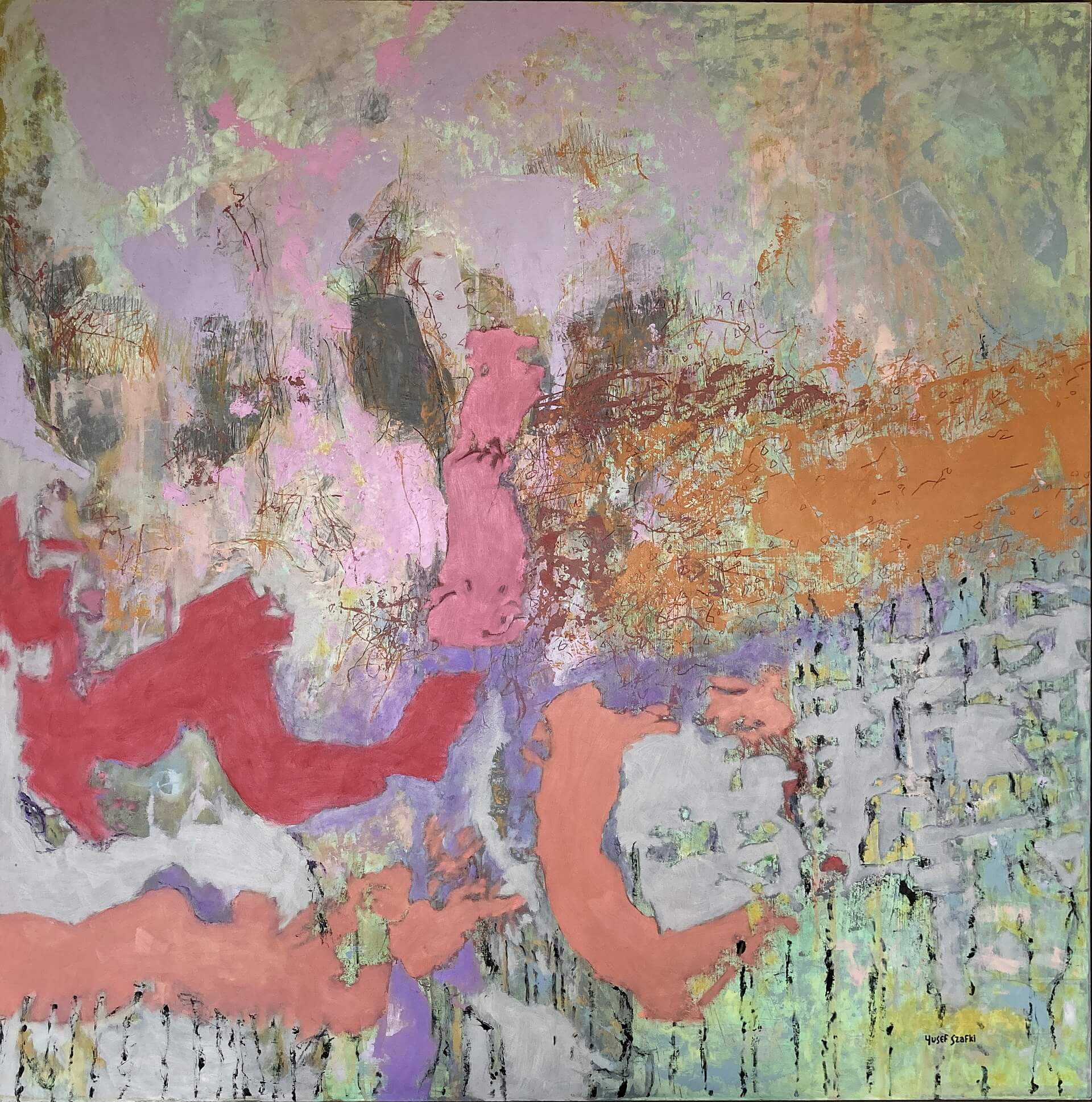
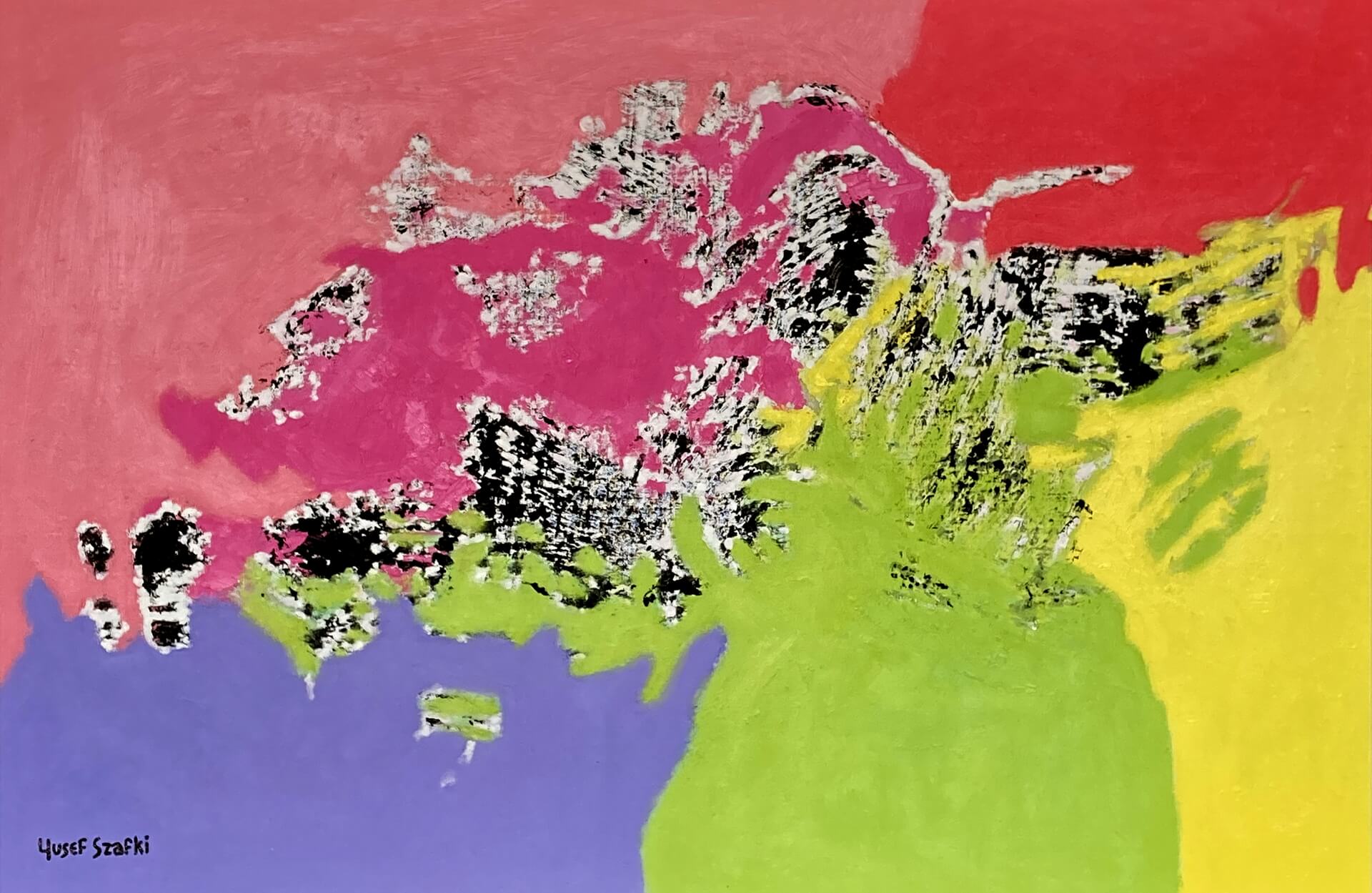
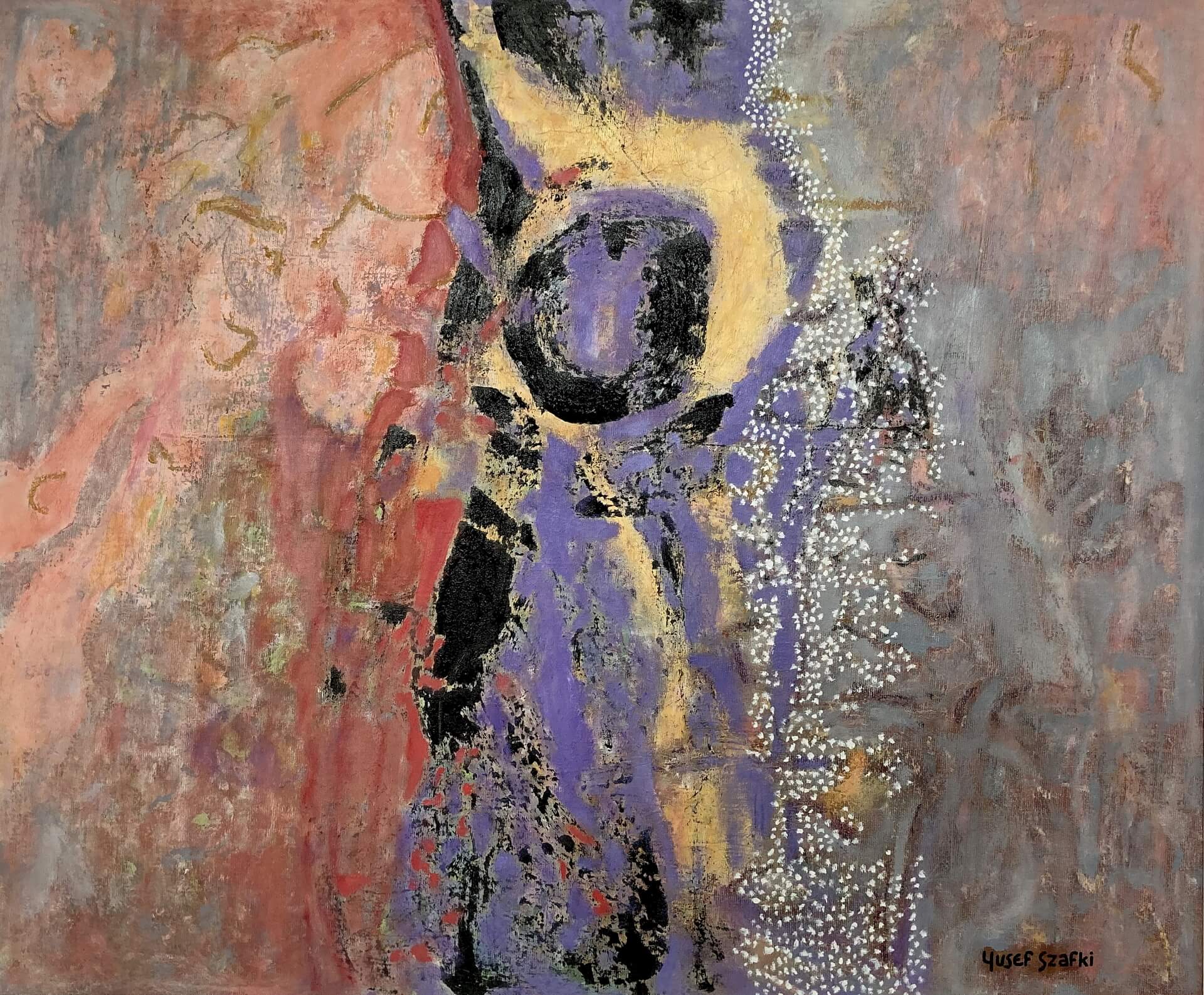
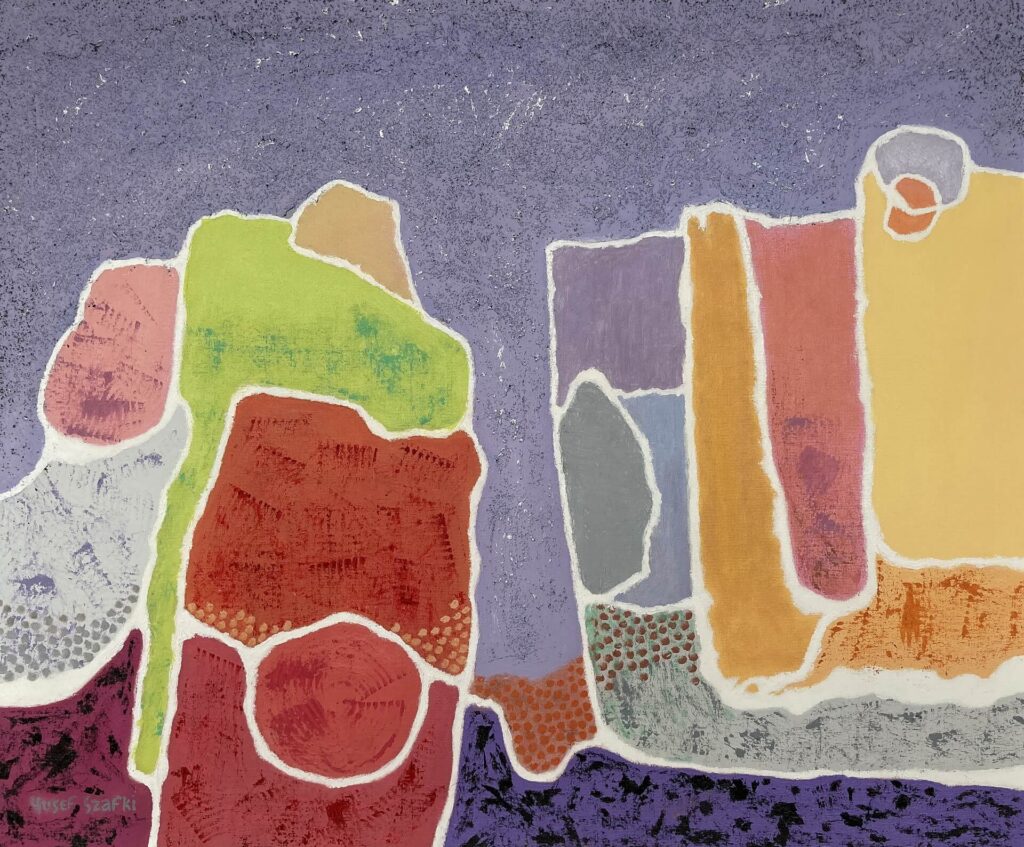
Scottish painter Yusef Szafki produced his colourful and enigmatic canvases over several decades, and was notably influenced by mid-twentieth century Abstract Expressionism.
Yusef Szafki’s heritage included Russian, Polish and Irish ancestry. His mother’s family came to Glasgow from Ireland while his father, Pawel Szatkowski, fled Stalinist Russia in the 1930s. He later served with Polish forces in France before settling in Glasgow in 1944.
An only child, Yusef showed early signs of decided intelligence and creativity, reading dictionaries while listening to his father’s tales of life in the Russian Empire, painting his first canvases and becoming an accomplished musician in his teenage years.
After studying philosophy and linguistics at Glasgow University, Szafki’s twenties were dominated by music creation and writing, while his painting moved to a more fluid style of Abstract Expressionism.
However, such a precarious lifestyle did not pay the bills, so in 1978 he took up a post as chief technician at the Department of Psychology at Strathclyde University. Many researchers expressed admiration for his highly creative and technical skills in supporting their work. At home he pursued his lifelong interest in East European art, music and literature.
The mid-1980s saw him focus on constructing various ‘non-functional’ machines in wood and metal, as well as sculptures inspired by African and ancient Greek art. He composed music and taught himself Russian in order to translate Gogol’s short story ‘Diary of a Madman’ into English. In his quest to reclaim his own heritage and identity, he changed his name from Joseph Kerr (Kerr was his father’s adopted name) to Josef Szatkowski in the mid-1970s, and then to Yusef Szafki in the early 1990s.
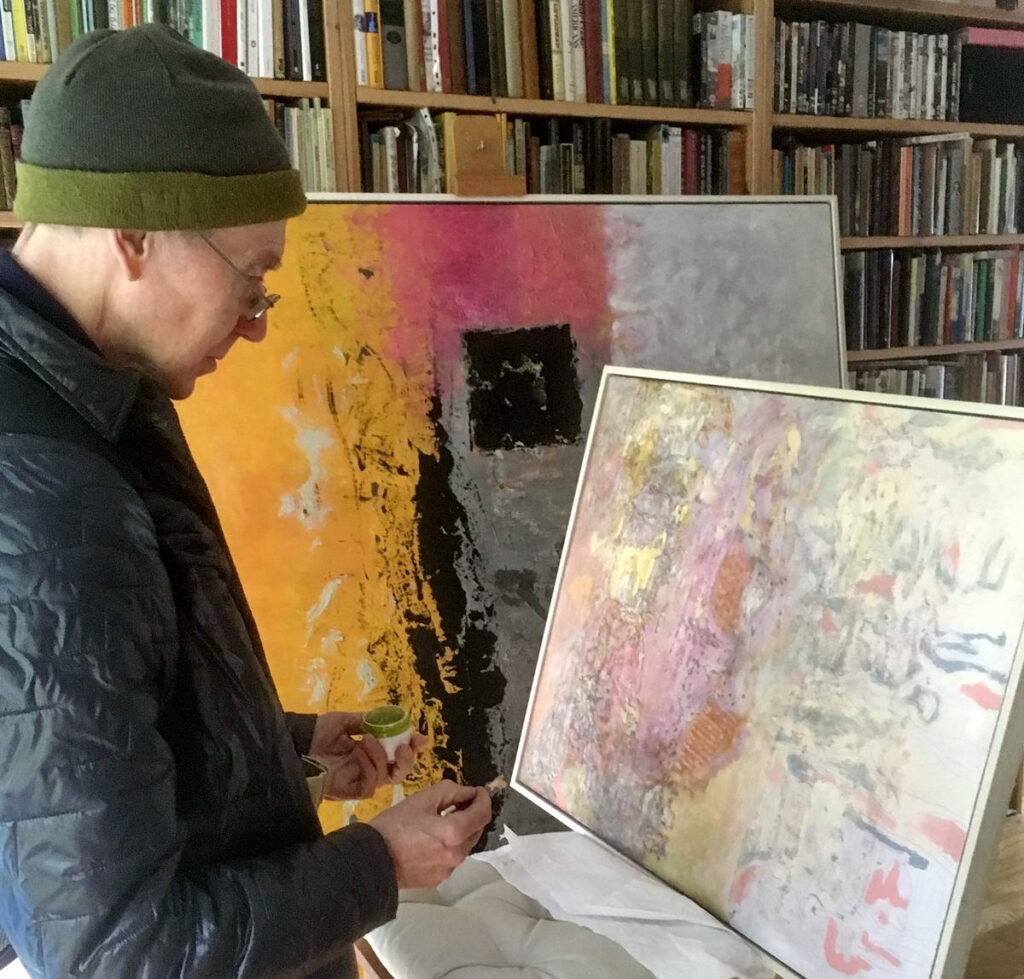
Moving from Glasgow to Edinburgh in 2002, Szafki studied Abstract Expressionism at Edinburgh College of Art before embarking on an intense period of painting in his New Town studio. He also travelled extensively throughout Europe with his wife Sheila Szatkowski, recording their journeys with an archive of some 3000 black and white photographs.
Illness in later years did not impede his artistic journey and much of his later work is a real testament to his mental resilience and tightened grip on life. He died peacefully at his Edinburgh home, surrounded by his paintings, on 23 November 2021.
“Une flamme muette ne brule pas moins vif. / A silent flame burns no less brightly.”
Yusef Szafki
Yuzef Szafki
Influences & Development
Born and raised in Glasgow as the only child of a Russian émigré, Szafki was heavily influenced by literature in his visual art. In an endlessly creative life, he published two literary works, including one on engaging with the Russian/Ukrainian writer Nikolai Gogol (60 Degrees N.: Diary of a Madman, 1996). Arguably the bold, dreamlike, exaggerated style of Szafki’s work is influenced heavily by the personality of Gogol and his writing in such stories as ‘Diary of a Madman’ and ‘The Nose’.
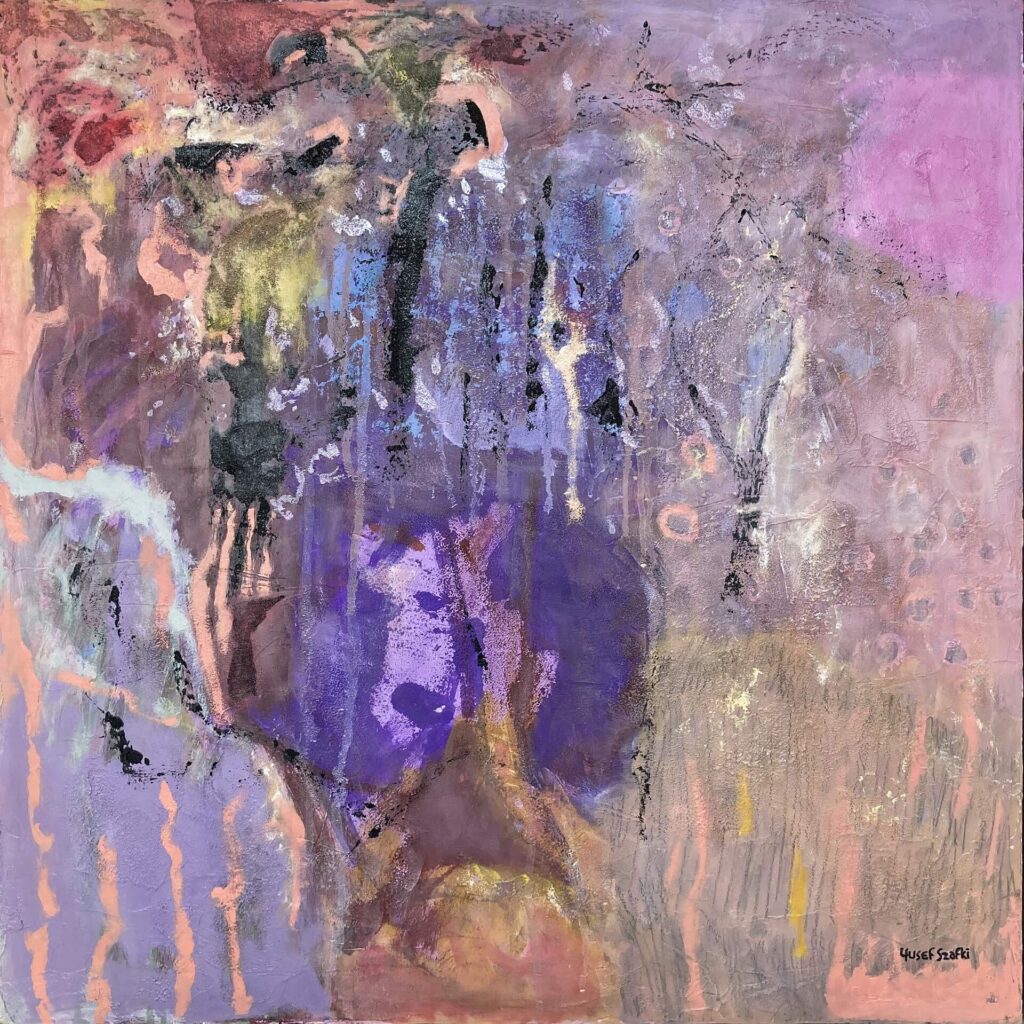
The title of Yusef’s 2022 exhibition at Edinburgh’s Dovecot Studios – Flaunting Szafki – drew on one of the pieces Szafki published in his own collection of stories Helsinki (Not the Town), 1995, and it encapsulated something of the boldness and joie-de-vivre seen in the themes and subject matter of his paintings.